
Written By Ade Olusola Kunmi
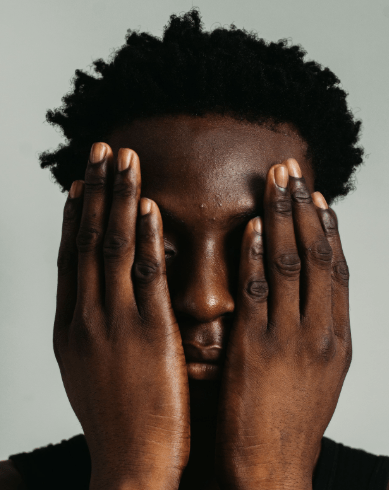
Kester Kanayo Onyemaechi, is a digital artist and an award winning photographer, whose works has been getting some attention. His recent creation, titled the duality of man features eight artworks, three of which are in coloured format and the other five artworks are in black and white formats.
Humans have numerous physical characteristics in pairs. The kidneys, hands, legs, eyes, and many more organs are in pairs. a common element in Kester’s artwork, which focuses a lot on the bodily parts that exist in pairs. This might represent a more profound reality to the enigmas of human existence. There could be anything to learn. This dichotomy informs us about more than just the anatomy of the body, It teaches us that people can serve as a mirror for their behaviour, reflecting on the internal struggles we face and the things we do that have ultimately molded who we are over time.
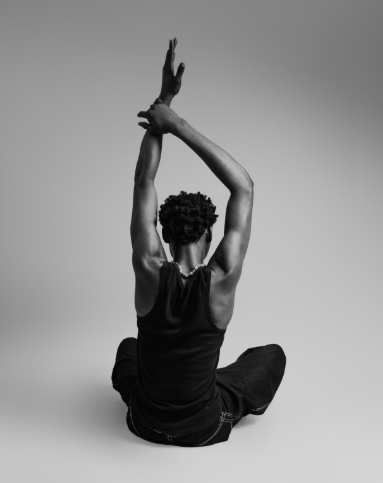
If we begin to self reflect, our body structure can teach us one or two on human nature, resolving conflicts and working together. With our two eyes, we see from different perspectives, but both eyes must work together to produce a perception with depth. Same goes for the hands, our hands can either work as a team in building or be conflicted and ends up destroying things. Our legs must move in rhythm or we may stumble. The duality of man represents how every human experience is being shaped by the interaction between two opposing forces.
Duality of man could also refer to the concept that human beings possess two contrasting sides within themselves, typically, Good vs. Evil, Rational vs. Emotional, Civilized vs. Primal, Light vs. Dark. This work expresses the relationship between opposite thoughts and actions within a person. Human beings are capable of creation and destruction, compassion and cruelty. This duality in human nature is not a flaw, but a mirror into what it means to be human. Kester’s decision to leave the model’s skin unaltered is another evident aspect of these pieces. such that all of the model’s imperfections, spots, and natural skin tone are still visible, possibly pointing to the reality that we are not all perfect.
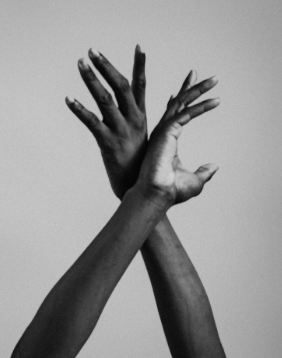
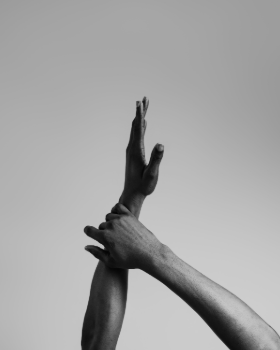
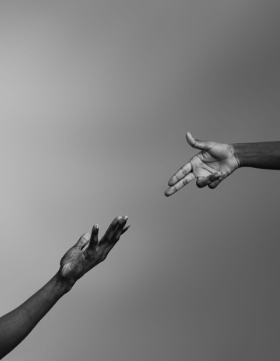
Kester brilliantly express this with these photographic images, delivering some in black and white and other images in coloured and perfectly positioned at the front of a Grey backdrop. Which is a good choice for these image about human duality. It depicts the blur in moral and emotional lines, supporting the idea that the human nature is not totally good neither bad. But usually exists on a range or continuum of possibilities. Things aren’t just one thing or the other, but can exist somewhere in between, or contain aspects of both.
Another thing that stands out in these photographs is the pose. In one of the pieces, Kester showed two hands of a model stretching out to each other, which appears to be similar to the old and popular Nokia emblem of linking people. Another set of photos shows the hands either crossing or gripping the other hand. These photos also convey a sense of dualism. One hand appears to offer assistance in pulling the other hand up, while the other hand is stretched out to grasp the hand at the top. If one looks closely, one can see that every stretched hand requires a hand to grab it in order to help.
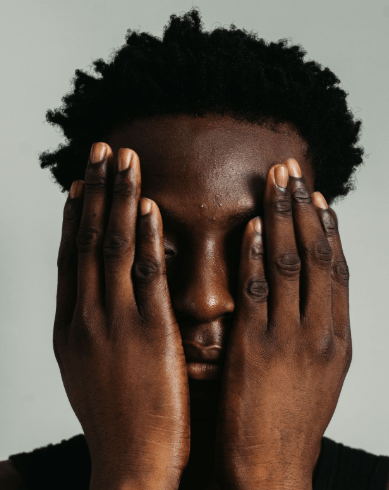
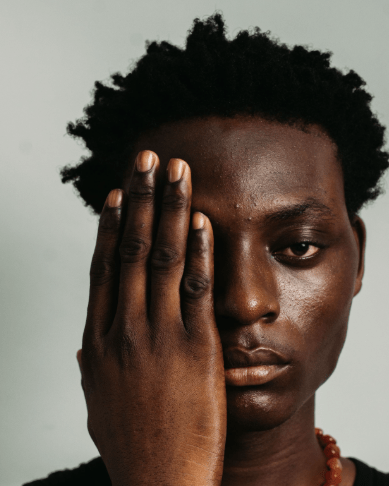

Another pair of works includes two photos, one with the subject covering his face with both hands and the other with the model covering a part of his face with one hand while the other side of his face is exposed, displaying his eyes. Another piece of art depicts the same subject in two different poses. The models’ side views can be seen, but only one eye from one of their faces is visible, whilst the other figure in the shot has both eyes visible.
Kester’s work presents images as dualities, emphasizing that every action has an equal and opposite reaction. These pieces are not only masterfully created but also challenge us to reflect on our choices and how they affect both ourselves and the communities we belong to. Rather than merely depicting, Kester’s art encourages introspection, prompting us to examine who we truly are and the image we present to the world.


 Culture Beyond the Mainstream