
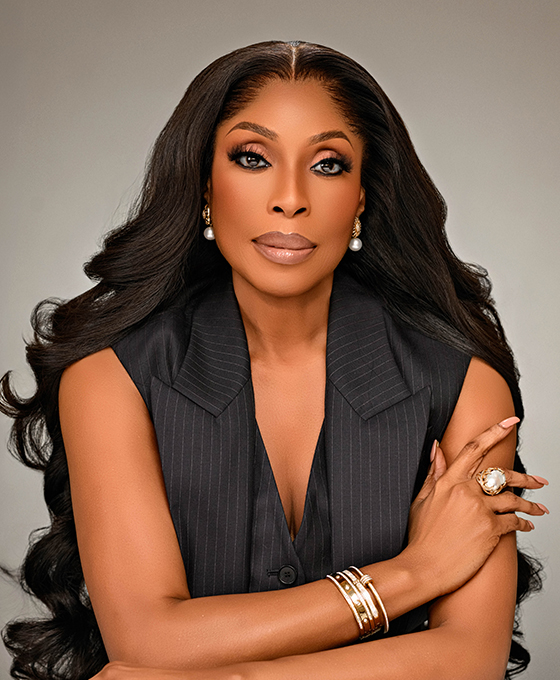
Mo Abudu has been named one of TIME Magazine’s 100 Most Influential People of the Year, a recognition that reflects a wider cultural shift in who gets to shape global narratives and how African stories are told and received. Her inclusion on the 2025 list places her among figures redefining power and influence, not through politics alone, but through culture, media and storytelling.
Widely known as one of the most powerful figures in African media, Abudu has spent years building platforms that centre African voices while speaking to international audiences. From her early success with Moments with Mo, which redefined television talk shows in Nigeria, she went on to found EbonyLife Group, a media and entertainment company that has become a major force in film and television across the continent and beyond. Through EbonyLife, she has produced some of the most commercially successful and culturally resonant Nollywood films and series, many of which have found global audiences on international streaming platforms.
TIME’s recognition highlights not just her output, but her vision. Abudu has consistently pushed for African stories to be owned, financed and controlled by Africans themselves. Her work spans film production, television, creative education and cultural infrastructure, including initiatives designed to train a new generation of African storytellers and creators. By investing in talent development and large scale production, she has helped shift African cinema from the margins of global entertainment into a more central and confident position.
Her profile on the TIME list was written by actor and producer Idris Elba, who praised her drive, ambition and ability to turn ideas into institutions. He described her as someone who builds ecosystems, not just projects, and whose influence is felt across studios, cinemas, creative spaces and boardrooms. The tribute underscores how her impact goes beyond entertainment into cultural diplomacy and economic empowerment.
Abudu has described the honour as bigger than herself, framing it as recognition of African creativity and the power of storytelling to challenge stereotypes and reshape perceptions. For alternative culture communities, her presence on the list signals a growing acceptance of narratives that exist outside traditional Western centres of power. It affirms that influence can come from building cultural worlds, not just occupying existing ones.
In a global media landscape still dominated by familiar voices, Mo Abudu’s inclusion on the TIME 100 stands as a reminder that alternative cultural power is often built quietly, through persistence, infrastructure and belief in stories that were once ignored. Her recognition is not just a personal milestone, but a marker of how far African popular culture has travelled, and how much further it intends to go.
 Culture Beyond the Mainstream