
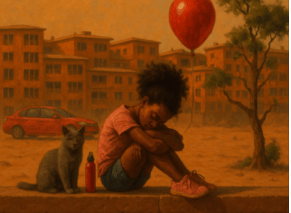
Olawale Gbologe’s Once, We Were Three is a beautifully subtle yet emotionally powerful digital art series. In only three pieces, the artist captures a deeply personal theme, parental separation, and translates it into a universal, resonant visual meditation.
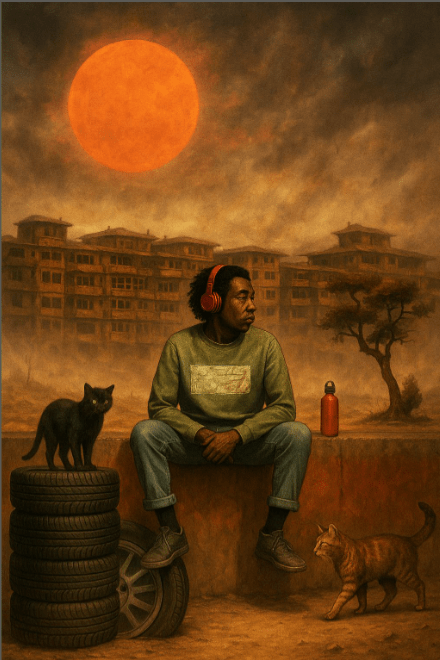
At the heart of this series is a sense of longing and a quietly rendered heartbreak. The recurring motif, a father, mother, and daughter each seated alone on the same short street fence, becomes a powerful symbol. What could once have been a simple space of play and togetherness is now a boundary, a delicate but firm reminder of distance. Gbologe uses this imagery not just as a literal representation, but as a metaphor for fractured relationships and emotional distance. According to his own description on the Pixieset page, the fence “becomes both a memory and a metaphor… now a quiet boundary between what was whole and what remains apart.”
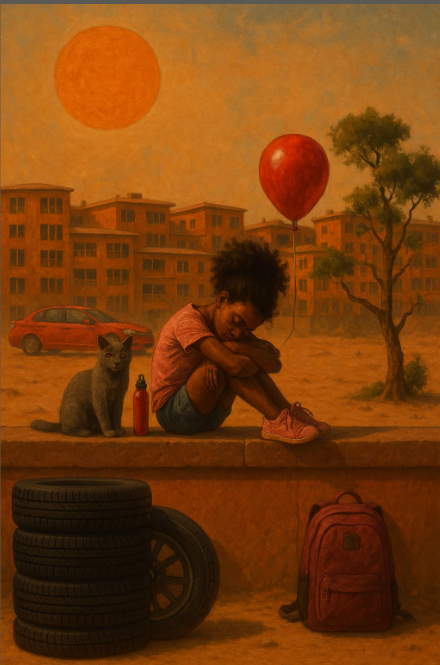
One of the most striking things about these works is how Gbologe chooses to isolate each figure, father, mother, and child in separate paintings. By separating them visually, he heightens the feeling of emotional isolation. Yet even as each figure is alone, the shared fence unites them spatially, creating an unspoken dialogue across the three works.
There is an implied chronology in the pieces: laughter and simplicity once filled this space, but now it is suspended in silence. The stillness is almost tangible, and Olawale Gbologe beautifully balances the nostalgia of a lost togetherness with the pain of distance.
The emotional tone of the work is a warm but melancholic retro hue, with soft oranges, gentle reds or yellows that amplifies the sense of memory and reminiscence. These tones evoke a feeling of looking back, of viewing lost moments through the lens of time. There’s a softness and restraint to the colours, allowing the emotional weight of the composition to carry the narrative more than loud or jarring visuals.
The fence is the central symbol in this trio. Once a perch for play and closeness, it now stands as a quiet marker of separation. The isolation of the figures suggests that, though physically close in memory, each person in this lost family space has become psychologically distant. The fence’s recurring presence grounds the series in a concrete location, but also elevates it to a metaphorical plane, what was once stable is now tenuous.
Gbologe also seems concerned with the invisible scars of childhood, the emotional residue left behind when love unravels. This is a powerful perspective: children often internalize separation in silent, lifelong ways, and these works speak directly to that emotional interiority.
Though the series is deeply personal (as described by the artist), its appeal is universal. Many people, whether they’ve experienced parental separation or not, can connect with the idea of loss, memory, and quiet emotional distance. Gbologe doesn’t just tell his story; he invites the viewer into a shared space, one built from fragments of what used to be, and what remains visible in memory.
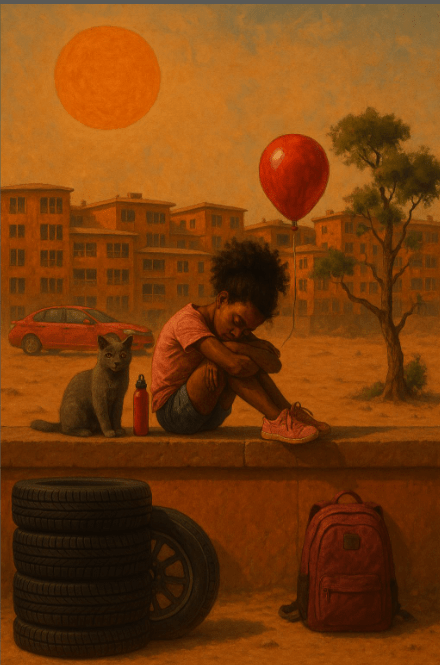

Technically, the work shows Gbologe’s strength in digital storytelling. Even though these are digital pieces, the emotional realism feels very human. The compositions aren’t overcrowded; they feel deliberately pared down, which makes every element, the fence, the posture of each figure, the space around them, count. The restraint in detail suggests a maturity in his artistic voice; he’s not trying to overwhelm with ornament, but rather to distil a feeling.
Once, We Were Three is a quiet triumph. It does not need loud drama to deliver its message. Rather, through its gentle symbolism, careful composition, and emotional sincerity, it becomes a space for reflection. It holds the viewer in a moment of stillness, prompting questions about presence and absence, memory and distance, love and loss.
Gbologe’s work here is both a personal catharsis and a compassionate outreach. It invites empathy and introspection. The series proves his capacity not just as a technical digital artist, but as a storyteller deeply attuned to the human heart.



 Culture Beyond the Mainstream