
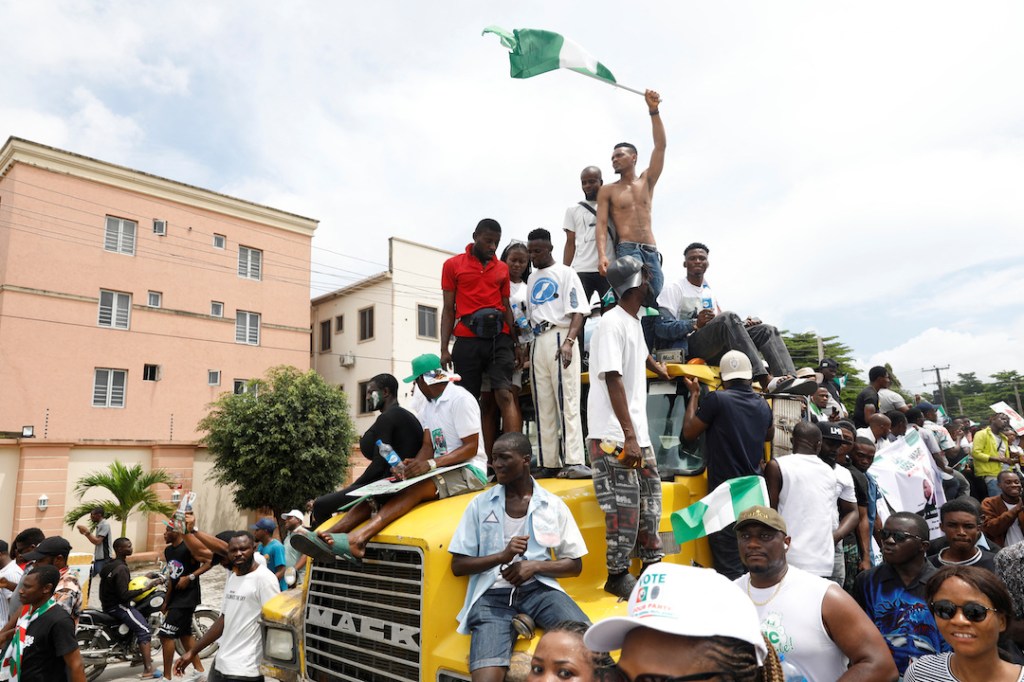
Nigeria is one of the youngest countries in the world by population, yet its political leadership remains among the oldest. With more than half of its population under the age of 30, the country’s youth demographic represents a numerical majority and a powerful social force. However, this dominance in numbers has not translated into meaningful control or influence within Nigeria’s political space, exposing a deep disconnect between population realities and political power.
Young Nigerians are highly visible in culture, technology, activism, and informal economic sectors, but they remain marginal in formal politics. Electoral politics is still largely controlled by entrenched elites who have dominated the system for decades. Political parties are often structured around patronage networks, financial power, and loyalty to powerful godfathers, creating high barriers to entry for young people without access to wealth or political connections.
One of the most significant obstacles is the cost of politics. Nomination forms, campaign logistics, and vote mobilisation require enormous financial resources. For many young Nigerians facing unemployment or underemployment, these costs are prohibitive. As a result, youth participation is often limited to grassroots mobilisation for older politicians rather than leadership roles or agenda-setting positions.
Institutional constraints further weaken youth influence. While reforms such as the “Not Too Young to Run” Act lowered the constitutional age requirements for elective office, structural realities remain unchanged. Party leadership positions are still dominated by older politicians who control candidate selection and decision-making processes. Young aspirants are frequently sidelined or pressured to step down in favour of more established figures.
Voter apathy and disenfranchisement also play a role. Despite high registration numbers, youth turnout during elections has been inconsistent. Distrust in the electoral process, concerns about vote manipulation, violence, and the perception that outcomes are predetermined discourage many young Nigerians from active participation. For some, politics is seen as a space that offers little return for engagement and high personal risk.
Economic precarity compounds the problem. With limited access to stable income, housing, and social security, many young Nigerians prioritise survival over sustained political organising. Activism often peaks during moments of crisis, such as protests against police brutality or poor governance, but struggles to translate into long-term political structures capable of contesting power.
The experience of movements led by young people has also revealed the limits of protest without political consolidation. While youth-led civic movements have demonstrated the ability to shape national conversations and challenge authority, they often lack the institutional backing, funding, and unified leadership needed to convert public energy into electoral success. Fragmentation and ideological differences within the youth demographic further dilute collective political strength.
Another key challenge is representation. Young people are often treated as a voting bloc rather than as policymakers. Political messaging frequently targets youth aspirations during campaigns, but once elections are over, youth-focused policies receive limited attention. This reinforces cynicism and weakens incentives for deeper engagement.
Despite these challenges, the potential of Nigeria’s youth demographic remains significant. Increasing political awareness, digital organising, and issue-based advocacy are gradually reshaping how young people engage with governance. The long-term question is whether this demographic power can evolve into institutional power.
Until systemic barriers such as high campaign costs, party gatekeeping, electoral distrust, and economic insecurity are addressed, Nigeria’s youth will continue to be underrepresented in the political arena. The paradox remains stark: a country driven by young people in population and productivity, yet governed by a political structure that has yet to fully make room for them.


 Culture Beyond the Mainstream