
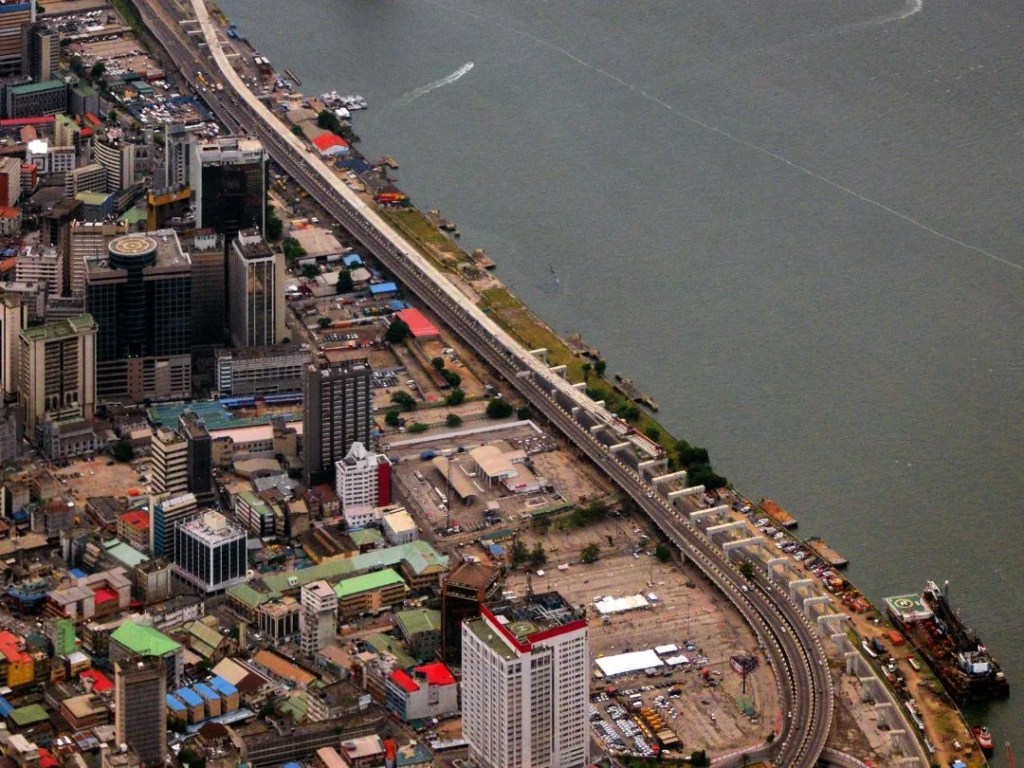
Lagos’s rapid urbanisation has reached a breaking point. Once envisioned as a city of opportunity, Lagos has become a symbol of extreme congestion, infrastructural overload, and declining quality of life. As millions continue to migrate from rural communities in search of economic survival, the city’s capacity to sustain its population has been stretched beyond limit. In response, a growing body of thinkers, planners, and citizens are beginning to question a long-held assumption: that progress must flow toward the city. Increasingly, the idea of rural return and decentralised development is emerging as a viable solution to Nigeria’s urban crisis.
Lagos illustrates the contradictions of unchecked urban migration. Despite being Nigeria’s commercial nerve centre, the city struggles with chronic traffic congestion, housing shortages, environmental degradation, and overstretched public services. Informal settlements expand faster than infrastructure, while basic amenities such as water, electricity, and sanitation remain inaccessible to millions. The promise of opportunity that draws people to Lagos often collides with the reality of underemployment, rising living costs, and deteriorating living conditions.
The root of this crisis lies not in population growth alone, but in Nigeria’s highly centralised development model. For decades, economic opportunities, political power, and infrastructure investment have been concentrated in a few urban centres, particularly Lagos and Abuja. Rural communities, by contrast, have suffered neglect, poor roads, limited healthcare, underfunded schools, and minimal industrial presence. Migration, therefore, is less a choice than a survival strategy.
Rejecting mass urban migration does not mean discouraging mobility or opportunity. Rather, it involves reimagining development so that people are not forced to abandon their communities in order to survive. Rural return and revitalisation offer an alternative path, one that decentralises growth and restores balance between urban and rural spaces.
A rural development strategy would focus on building economic ecosystems outside megacities. This includes investing in agro-processing, renewable energy, digital infrastructure, and local manufacturing. With reliable internet access, electricity, and transport links, rural areas can support modern enterprises without requiring physical proximity to urban centres. Remote work, digital entrepreneurship, and decentralised production make it increasingly possible for people to earn livelihoods outside major cities.
Agriculture, long neglected despite its employment potential, remains central to this vision. Modernising farming through mechanisation, access to credit, and value-chain development can transform rural areas from zones of subsistence into hubs of economic productivity. When rural economies thrive, migration becomes a choice rather than a necessity.
The cultural dimension is equally important. Rural return challenges the social stigma attached to life outside major cities. For decades, success in Nigeria has been symbolised by urban residence, particularly in Lagos. Reversing this narrative requires reframing rural life as a space of innovation, dignity, and sustainability rather than backwardness. Community-based industries, creative hubs, and cooperative models can help restore this sense of value.
For Lagos specifically, easing population pressure through rural revitalisation would reduce congestion, lower housing demand, and ease strain on transportation and public services. It would also allow the city to function more efficiently, focusing on quality rather than sheer volume. Decentralisation would shift Lagos from being a survival hub to a strategic economic centre within a balanced national system.
Policy implementation is key. Government commitment must extend beyond rhetoric to concrete investment in rural infrastructure, land reform, decentralised governance, and incentives for businesses operating outside major cities. Equally important is political will to empower local governments and communities to manage development according to local needs.
Rejecting urban migration as the default path is not a rejection of progress, but a redefinition of it. The future of Nigeria does not lie in overcrowded megacities struggling under their own weight, but in a network of thriving towns and rural communities connected by opportunity, not desperation. By reimagining development from the ground up, Nigeria can move toward a more balanced, sustainable, and humane model of growth.



 Culture Beyond the Mainstream