
The United States has indicated that further military strikes against Islamist militant groups in north-west Nigeria are likely, as Nigerian officials emphasise that recent operations were conducted in close cooperation with Abuja.
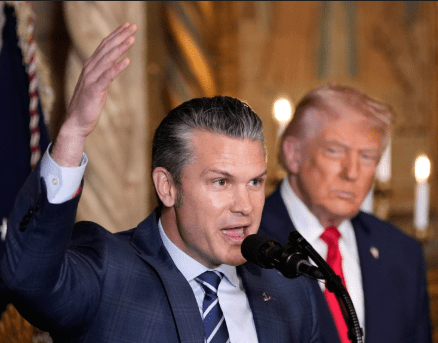
US Defence Secretary Pete Hegseth said the first wave of airstrikes, carried out on Christmas Day against camps used by Islamic State–linked fighters in Sokoto state, was only the beginning. In a social media post he framed the action as a response to violence against Christian communities, saying President Donald Trump had made ending such attacks a priority and adding that “more to come” should be expected from US forces.
In Abuja, Nigeria’s Foreign Minister Yusuf Tuggar insisted the operation was a collaborative effort between the two countries. He told broadcasters that Nigeria provided the intelligence that made the strikes possible and that President Bola Tinubu personally approved the action after consultations with US officials. Tuggar described the mission as part of “joint ongoing operations” to combat terrorism and stressed it was not motivated by religion.
Nigeria, a secular state with a near-even split between Muslim and Christian populations, has been grappling with a complex security crisis. Armed groups including Islamic State’s Sahel Province and local bandit networks have carried out kidnappings, raids and attacks on civilians across the country’s north. The government says these threats endanger all Nigerians, regardless of faith.
Residents of Jabo village in Sokoto state reported a tense Christmas night as missiles struck nearby militant positions, with panic and confusion spreading as the sky lit red. Nigerian security forces later sealed off the area. Officials from both countries have not publicly confirmed casualty figures.
While the US military’s Africa Command said the strikes were coordinated with Nigerian authorities, Washington’s framing of the violence as predominantly targeting Christians has drawn scrutiny. Analysts point out that extremists in Nigeria’s north have long preyed on diverse communities, and that criminal motives such as ransom kidnappings often intertwine with ideological objectives.
The latest developments mark a new phase in security cooperation between Nigeria and the United States, reflecting a shared commitment to pressuring insurgent networks that have long destabilised the region. Nigerian leaders maintain that the effort aims to protect civilians and uphold security across the country, even as questions linger over the broader implications of increased foreign military involvement.

 Reports Beyond the Mainstream