
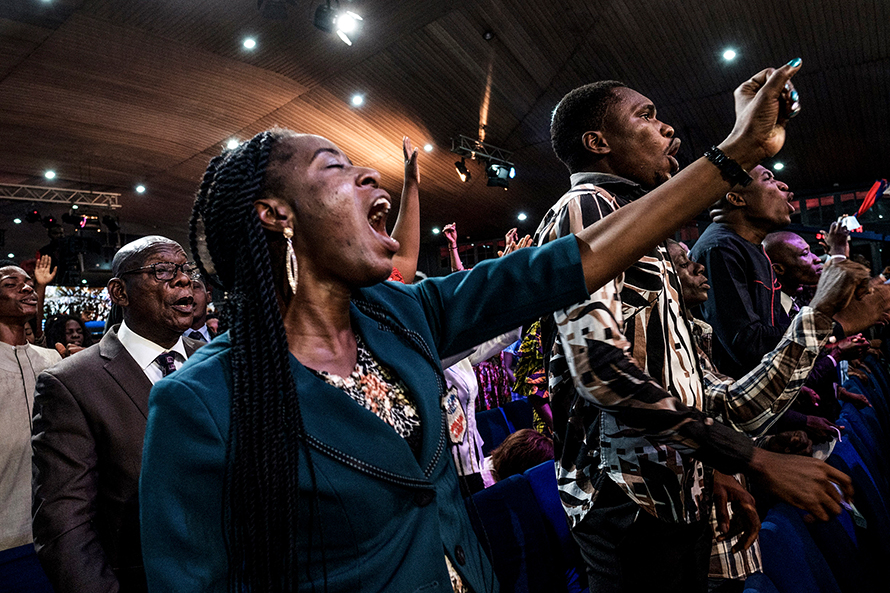
Pentecostal prosperity theology has become one of the most influential religious frameworks in contemporary African Christianity, particularly in Nigeria. Built on the promise that faith, obedience, and financial “sowing” will result in material wealth, good health, and social elevation, the doctrine has reshaped how success, spirituality, and suffering are understood. Yet as public disputes increasingly expose tensions within this belief system, critics are calling for a deeper interrogation of its moral, social, and political consequences.
At its core, prosperity theology reframes Christianity as a transactional relationship. Blessings are presented not as spiritual grace but as measurable outcomes, money, property, visibility, influence. Poverty and hardship are often interpreted as signs of weak faith, spiritual blockage, or disobedience. This framing shifts responsibility away from structural inequality and places it squarely on the individual believer, insulating both the church and the broader economic system from critique.
One of the central contradictions of prosperity theology lies in authority. Pastors function not only as spiritual leaders but as proof of the doctrine itself. Their wealth, lifestyle, and access to power are displayed as evidence that the theology works. This creates an imbalance where questioning the pastor becomes equivalent to questioning God, and dissent is framed as rebellion rather than accountability.
Recent public controversies have brought this imbalance into sharper focus. The dispute involving Pastor Chris Okafor and Nollywood actress Doris Ogala became a flashpoint in public conversations about spiritual power, celebrity, and control within Pentecostal spaces. While the details of the disagreement played out in the public domain through accusations and counter-accusations, what resonated more broadly was what the case symbolized: the fragile boundary between spiritual guidance and coercive influence.
For critics of prosperity theology, the episode illustrated how religious authority can extend beyond the pulpit into personal, professional, and psychological domains. Celebrities, often used by churches as symbols of divine favour and evangelistic success, can also become vulnerable within these systems. When relationships sour, the same spiritual language that once affirmed blessing can be weaponised to imply betrayal, spiritual failure, or moral corruption.
This dynamic exposes a deeper issue within prosperity theology: the absence of clear ethical limits on pastoral power. When material success is spiritualised, pastors gain influence not only over belief but over aspiration itself. Followers are encouraged to align their ambitions, finances, and public identities with the church’s vision of prosperity. In such an environment, disagreement is not merely personal—it is theological.
Another critical concern is how prosperity theology reshapes morality. Wealth becomes a sign of righteousness, while suffering is stripped of social context. This logic makes it difficult to challenge exploitation, abuse, or excess within religious institutions, because success itself is treated as moral justification. The question shifts from “Is this right?” to “Is it working?”
Importantly, deconstruction does not mean rejecting Pentecostalism or spirituality outright. Rather, it involves separating faith from fetishised wealth and disentangling religious hope from material display. It asks whether Christianity should mirror capitalist hierarchies or challenge them. It questions why pastors are exempt from scrutiny while followers are encouraged to give beyond their means.
Public disputes like that involving Pastor Chris Okafor and Doris Ogala matter because they rupture the image of seamless blessing that prosperity theology depends on. They reveal the human conflicts, power struggles, and emotional costs hidden behind testimonies and miracles. In doing so, they open space for believers and observers alike to ask harder questions about consent, accountability, and spiritual freedom.
Ultimately, the deconstruction of Pentecostal prosperity theology is not about scandal, but about structure. It is about recognising how faith is shaped by power, how hope is monetised, and how silence is enforced. As more people begin to question these dynamics, the conversation is shifting from individual disputes to systemic critique—marking a critical moment in the evolution of contemporary religious consciousness.


 Culture Beyond the Mainstream