
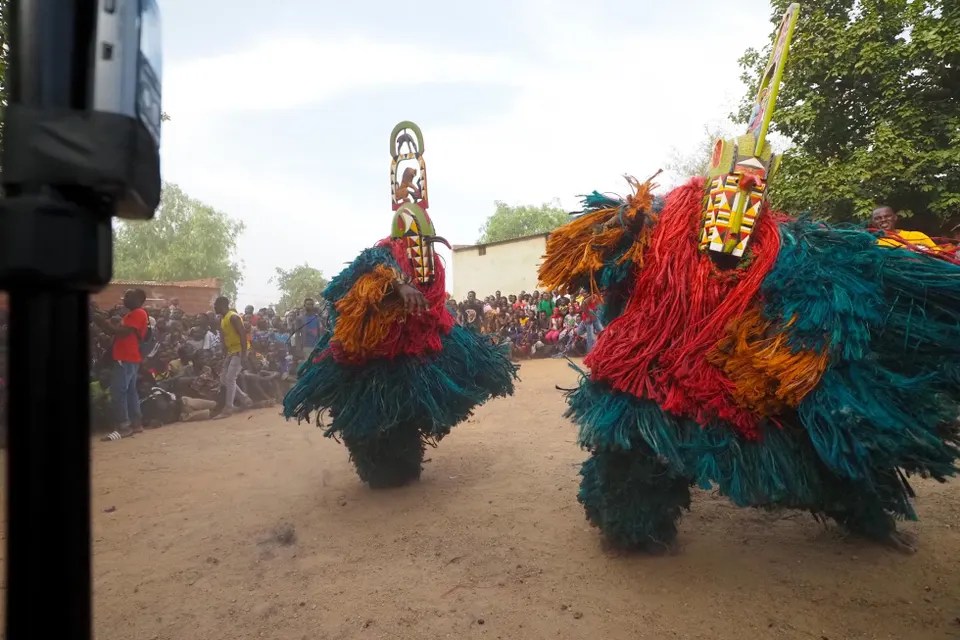
Masquerades have long occupied a sacred and communal space in Nigerian societies. Traditionally, they functioned as vessels of ancestry, spirituality, moral instruction, and social order. From the Egungun of the Yoruba to the Mmanwu of the Igbo and the Ekpe of the Cross River region, masquerades were not merely performances but embodiments of memory and power. Today, these forms are undergoing dynamic reinterpretation within festivals and carnivals, reshaped by contemporary realities while retaining their symbolic core.
In modern Nigerian festivals, masquerades are increasingly positioned at the intersection of heritage and spectacle. Events such as the Calabar Carnival, Eyo Festival reinterpretations, and urban cultural showcases have transformed masquerade performances into expansive visual experiences. Costumes now incorporate synthetic fabrics, LED lights, exaggerated silhouettes, and experimental color palettes. While traditional materials like raffia, cloth, and wood remain important, artists and designers blend them with modern techniques, signaling a shift from purely ritual use to expressive cultural performance.
These contemporary masquerades also reflect changing narratives. Where traditional masquerades often enforced communal norms or spiritual authority, modern reinterpretations engage with themes of identity, politics, migration, gender, and youth culture. Performers use movement, costume, and symbolism to comment on present-day struggles and aspirations. The masquerade becomes less about concealment and more about revelation, exposing truths about society through metaphor and performance.
Urbanization and globalization have further influenced these reinterpretations. Young creatives, choreographers, fashion designers, and visual artists are reclaiming masquerade aesthetics as tools for self-expression. In carnivals and art-led festivals, masquerades are staged for diverse audiences, including tourists and global viewers, shifting their function from sacred exclusivity to shared cultural storytelling. This transition raises questions about authenticity, but it also ensures continuity by keeping the tradition alive and visible.
Importantly, these reinterpretations do not signal a loss of meaning but an expansion of it. Contemporary masquerades operate in dual spaces. They honor ancestral memory while responding to modern life. They exist both as cultural preservation and as evolving art forms. By adapting to new contexts, masquerades resist stagnation and assert their relevance in a rapidly changing Nigeria.
In today’s festivals and carnivals, the masquerade is no longer bound solely to the past. It moves with the present, shaped by innovation, creativity, and collective imagination. Through contemporary reinterpretation, masquerades continue to serve as powerful symbols of Nigerian identity, proving that tradition is not static but alive, responsive, and constantly becoming.
 Culture Beyond the Mainstream