
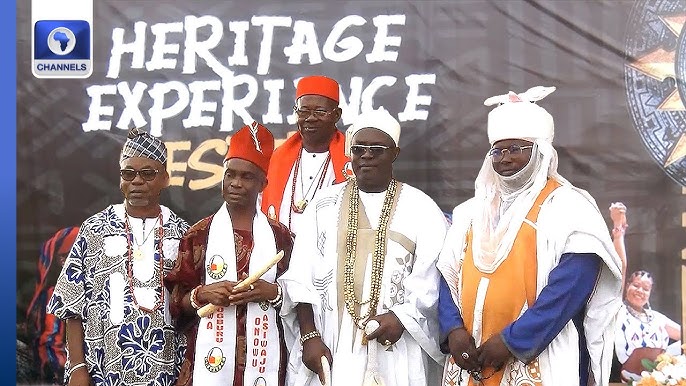
The Ondo State Government’s recent cultural festival offers a timely insight into how culture continues to function as one of Nigeria’s strongest tools for unity in a deeply diverse society. Beyond the music, dance, and ceremonial displays, the event reflected a broader national conversation about identity, belonging, and shared heritage.
Bringing together cultural performers, community leaders, residents, and visitors, the festival created a space where multiple traditions coexisted without competition. Indigenous music, dance, costumes, and visual expressions from different communities within the State were presented side by side, reinforcing the idea that diversity does not weaken national identity but strengthens it. Each performance carried its own history while contributing to a collective narrative of continuity and coexistence.
The emphasis placed by state officials on cultural preservation and tourism highlighted an important shift in how culture is increasingly viewed as both a social and economic asset. In a country often challenged by ethnic, religious, and regional divisions, cultural festivals offer a neutral ground where shared values such as respect for ancestry, community, and creativity take precedence over difference. They also serve as informal classrooms, passing knowledge from elders to younger generations through lived experience rather than textbooks.
Audience reactions underscored the power of culture to educate as much as it entertains. Many attendees described the festival as an opportunity to encounter traditions beyond their immediate communities, fostering understanding and appreciation across cultural lines. The performances, processions, and rituals demonstrated how local identities can remain intact while contributing to a broader Nigerian story.
Within the wider Yoruba cultural landscape, Ondo State’s festival also reflected a national reality. Nigeria’s unity has never been rooted in sameness but in the ability of distinct cultures to exist in dialogue. Events like this reaffirm that unity is not enforced through uniformity but cultivated through visibility, recognition, and shared celebration.
As Nigeria continues to navigate questions of national cohesion, the Ondo cultural festival stands as a reminder that culture remains a powerful connector. By investing in heritage preservation, creative expression, and inclusive cultural platforms, governments and communities alike can reinforce a sense of collective ownership over the nation’s identity. In this way, culture becomes more than tradition; it becomes a practical framework for unity, resilience, and sustainable development.
 Culture Beyond the Mainstream