
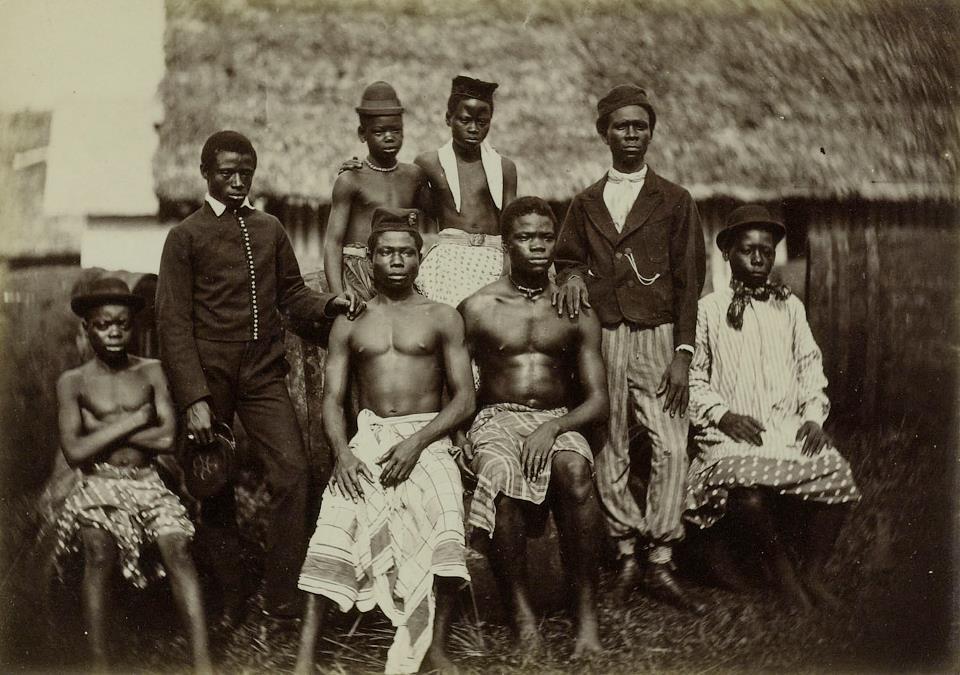
The question of who owns Nigerian history and who tells it is central to how the nation understands its past and defines its identity. Much of what is known today about precolonial Nigeria has been shaped not by the people who lived those histories, but by European travellers, missionaries, traders and colonial officials who documented selected encounters through foreign cultural and political perspectives. These written accounts later became the backbone of formal education, archives and museum narratives, granting them authority while marginalising indigenous ways of recording and preserving history.
Across precolonial Nigeria, numerous powerful and sophisticated societies existed long before European contact. Kingdoms, city states and federated communities developed political systems, legal traditions, economic networks, spiritual institutions and artistic practices that sustained complex civilizations for centuries. Yet many of these societies were either never visited by Europeans or only briefly encountered. As a result, their histories were poorly documented in colonial records, leaving their achievements fragmented, misunderstood or excluded from dominant historical narratives.
European writers focused primarily on societies they interacted with most, particularly those that were militarily organised, centrally governed or commercially useful to European interests. Kingdoms such as Oyo, Benin, Kanem Bornu and others received more sustained attention, while many equally important societies were mentioned only in passing or described as subordinate entities. Entire regions were reduced to background spaces, and independent polities were framed as peripheral or insignificant, not because they lacked complexity or power, but because they did not fit neatly into European frameworks of governance and statehood.
This selective documentation created a distorted hierarchy of importance within Nigerian history. Over time, repetition of these narratives in academic research, school curricula and public discourse reinforced the idea that only a few precolonial societies mattered. Oral histories, archaeological evidence, indigenous chronicles, ritual knowledge and material culture were often dismissed as unreliable or unscientific because they did not conform to European methods of record keeping. This imbalance privileged written colonial texts over living memory and local knowledge systems.
In reality, precolonial Nigeria was a mosaic of functioning societies that governed themselves, managed trade, produced art, conducted diplomacy and adapted to their environments long before European intervention. The absence of extensive written European records does not indicate historical absence or inferiority. It reflects unequal documentation and the limits of colonial observation rather than the limits of African civilization.
Reclaiming precolonial Nigerian history requires questioning inherited colonial narratives and expanding the sources through which history is understood. Oral traditions, archaeology, linguistics, art history and community memory must be treated as valid historical evidence. Nigerian history must be approached as plural and interconnected, rather than reduced to a few dominant kingdoms standing in for an entire nation.
Recognising the histories of all indigenous precolonial societies in Nigeria is not an attempt to rewrite history, but to restore it. These societies existed, governed themselves and flourished long before European contact. Their stories deserve careful study, accurate representation and respect. Only by embracing the full diversity of Nigeria’s precolonial past can the country reclaim ownership of its history and ensure that its historical narrative reflects the true depth, complexity and dignity of its civilizations.



 Culture Beyond the Mainstream