
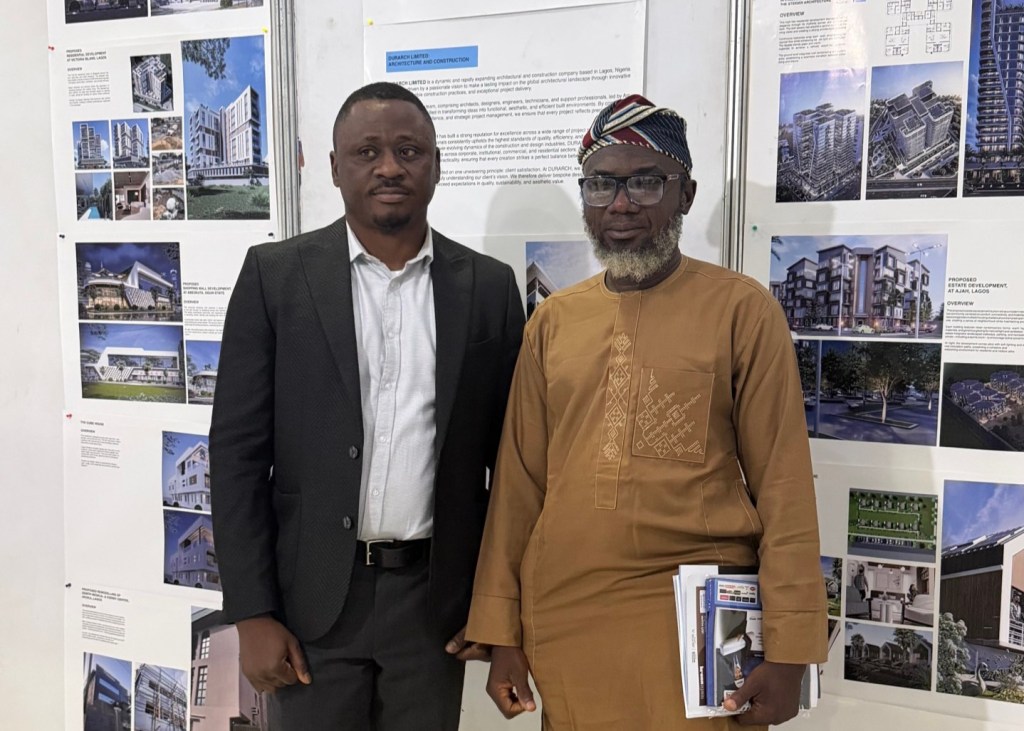
Arc. Durojaiye Rotimi Ale’s architectural drawings at the Nigerian Institute of Architects’ 65th Annual General Meeting, Conference & Exhibition showcase a self-assured, forward-thinking body of work that perfectly complements the conference’s theme, Architectural Excellence for Economic Resilience. In Nigeria’s quickly changing urban terrain, the exhibition articulates architecture not just as form-making but also as an economic, social, and environmental tool across residential, commercial, healthcare, mixed-use, and master-planning typologies.
The exhibition’s cohesive architectural language is one of its strongest points. The drawings exhibit a methodical control of massing and proportion, whether it is seen in the striking geometric clarity of The Cube House, Lagos, the flowing curved façades of the Abeokuta shopping mall, or the rhythmic verticality of high-rise residential developments in Ikoyi and Victoria Island. Each project can adapt uniquely to its location while maintaining a recognizable architectural identity thanks to the recurring elements of expressive façades, layered forms, and clean lines.
A thorough understanding of tropical architecture, where shade, airflow, and visual depth are crucial rather than decorative, is shown in the thoughtful use of setbacks, terraces, recessed balconies, and interlocking volumes.
Architecture is persuasively presented in the exhibition as a means of fostering economic resilience. The planned shopping centers in Ado-Ekiti, Abeokuta, and Ilorin are intended to be urban economic accelerators rather than just retail spaces. By extending commercial activity outside of confined interiors, open terraces, transparent glass, pedestrian plazas, and integrated social areas improve usability, foot traffic, and long-term economic viability.
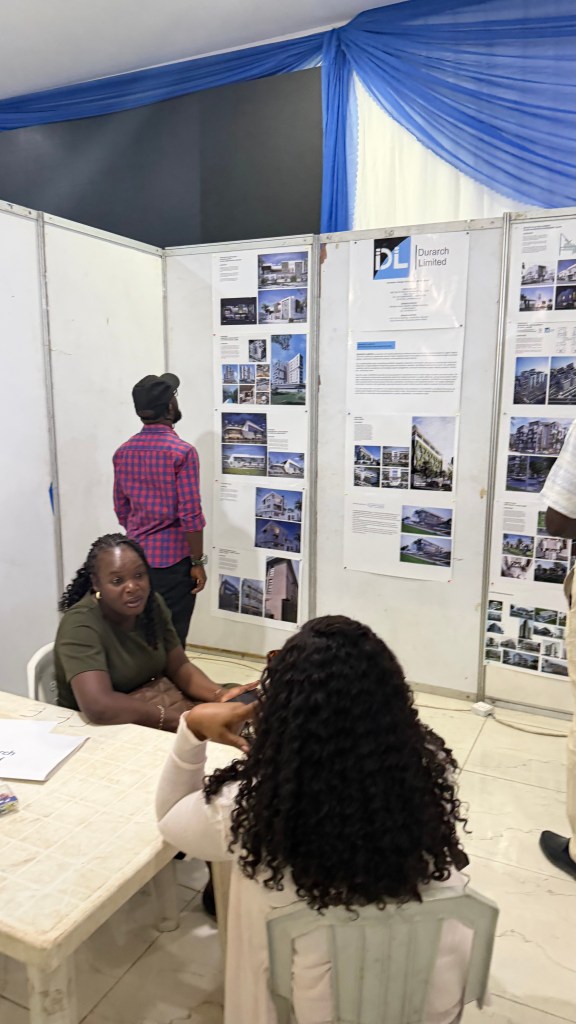
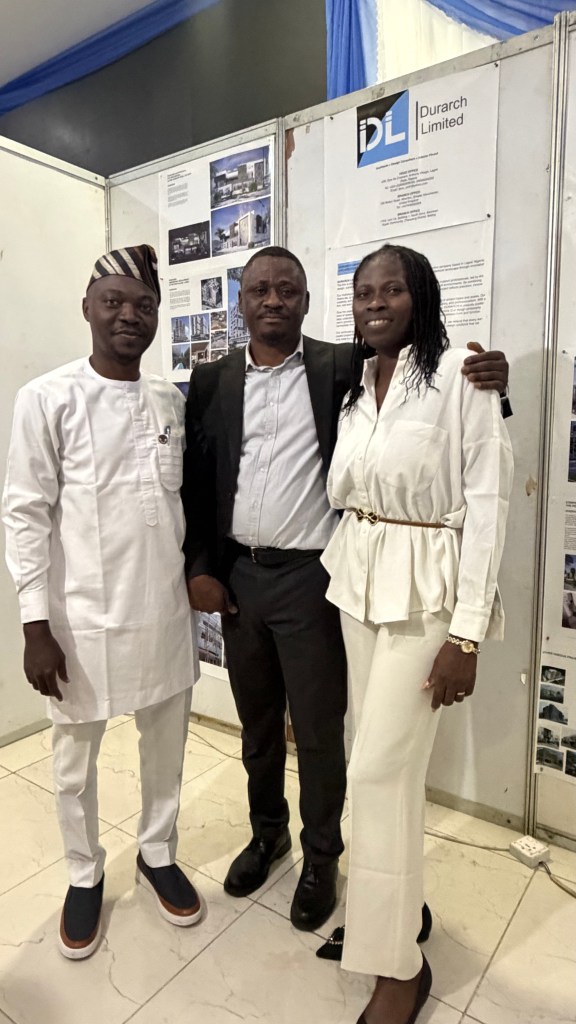
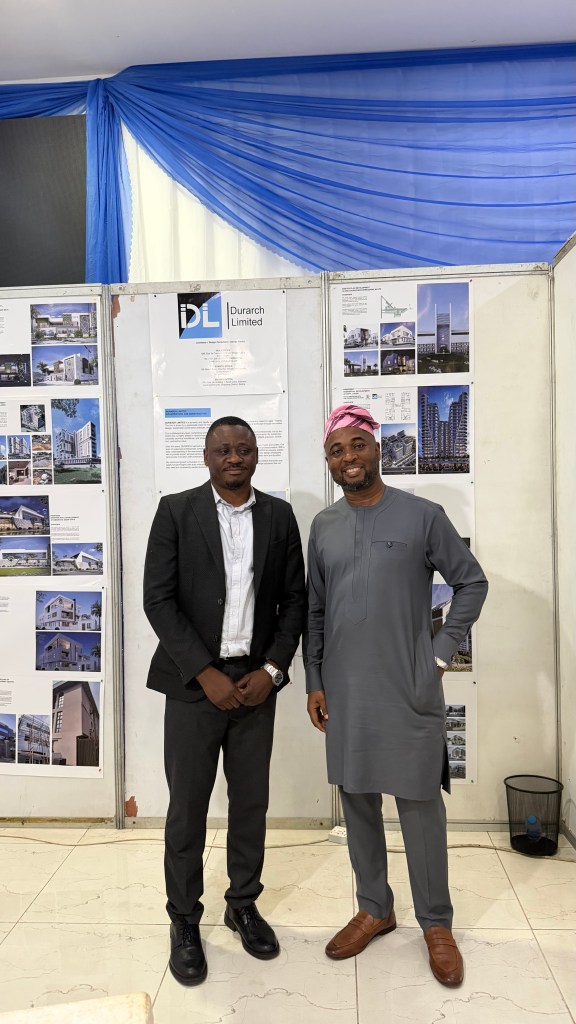
The residential skyscrapers in Ikoyi and Victoria Island, as well as the estate developments in Ajah, show how careful planning, shared open spaces, effective circulation, mixed-use podiums, and flexible unit layouts can optimize land value while improving quality of life. A crucial issue in modern Nigerian towns, these designs propose a practical balance between profitability and livability.
The drawings all softly but constantly incorporate environmental responsiveness. A climate-conscious strategy that lessens dependency on mechanical systems is indicated by vertical green walls, perforated screen façades, deep overhangs, enough glazing for daylighting, and landscaped courtyards.
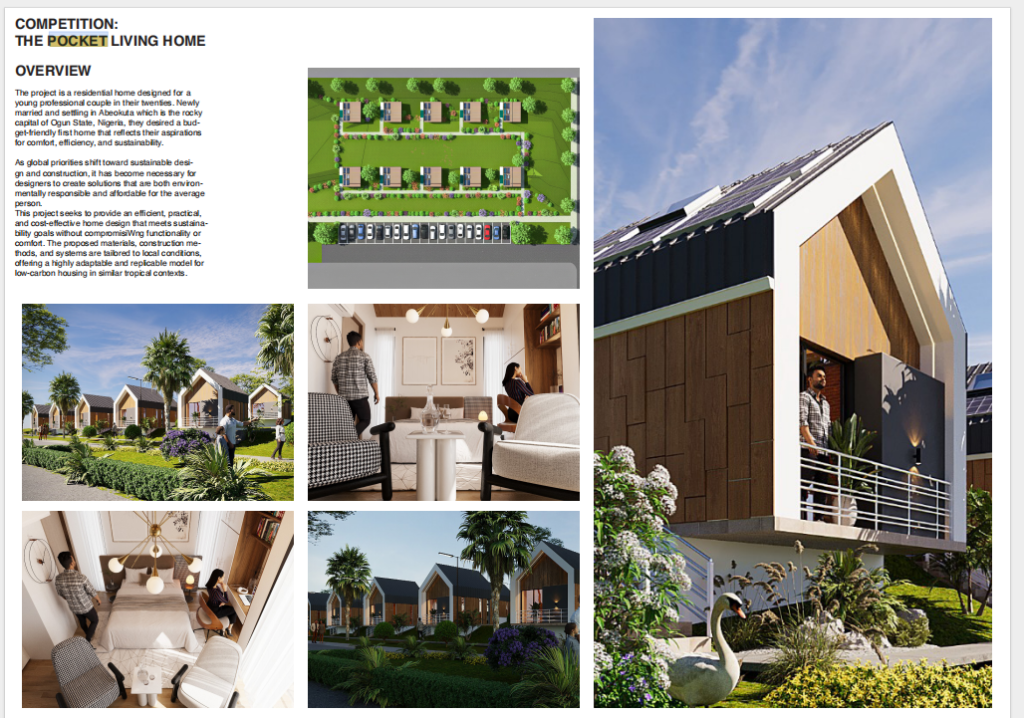
The Pocket Living Home, a competition entry notable for its social significance, is the clearest example of this approach. The proposal emphasizes sustainability, local materials, and cost effectiveness without compromising dignity or spatial quality. It is intended to be an inexpensive, low-carbon starter home for young professionals. It serves as a reminder within the larger exhibition that housing accessibility and environmental stewardship are inextricably linked to economic resiliency.
Material palettes are expressive but restrained across the body of work. While preserving structural practicality, the interaction of white plaster, rough stone, glass, metal screens, and warm accent tones produces visual rhythm. An focus in material honesty is evident in the sketches, where finishes are applied superficially rather than to articulate structure, depth, and function.
The designs’ experiential quality is further reinforced by nighttime representations, which use regulated illumination to improve urban presence, safety, and readability.
The proposed renovation of the Zenith Medical & Kidney Centre in Akoka shows consideration for functional transformation and adaptive reuse. The proposal demonstrates an awareness of hospital architecture as a technological and compassionate setting where well-being is directly impacted by operational efficiency, serene aesthetics, and clear circulation.
The master plan along the Akure–Owo Expressway broadens the exhibition’s focus to include territorial thinking in addition to specific buildings. It highlights the architect’s capacity to work at many scales, connecting land use, infrastructure, and architectural form—a crucial talent in tackling Nigeria’s long-term development issues.
Architecture is portrayed in Durojaiye Rotimi Ale’s display at the 65th NIA AGM as a strategic tool for resilience, economic viability, environmental responsiveness, and social grounding. The illustrations propose proposals that are both aesthetically pleasing and feasible, modern and context-aware, striking a balance between desire and realities.
The show, which took place at the NIA Village in Abuja, made it abundantly evident that Nigerian architecture today is distinguished not just by its distinctive shape but also by its ability to sustain cities, empower people, and effectively adjust to changing economic conditions.




 Culture Beyond the Mainstream