
Written by Kelvin O Johnson
When I look at Africa today, all I see is the western world In the Middle and dark Ages, The western world use to be very very superstitious and extremely religious. People believed emphatically in all kinds of stupid and nonsensical things, some of which a lot of the times led to very very tragic consequences.
Examples would include a belief in witches and evil spirits as a cause of bad luck and misfortune… a pervassive belief in magic,charms and sorcery… and the religious linking of this beliefs to satan.
All of this were blamed for many of the hardships that plagued the western population during this period. It got so bad that it birthed the barbarism of burning individuals living in isolation suspected to practice witchcraft , voodoo and charms, as their activities were attributed to their hardships.
Hundreds and thousands of innocent individuals at various times were at the wrong side of such barbarism and were burnt alive at the stake. Witch hunts and superstitions caused many deaths and worried the minds of countless people.
Other superstitious beliefs include the common “god bless you “ belief when you sneeze .. it is known to have come from the Middle Ages in medivial Europe .. There was a belief that sneezing gave Satan the opportunity to enter the body and the person who sneezed needed the help of God to exorcise the devil and chase it out.
Saying “God bless you” was believed to be a way to keep the Devil from entering the body and therefore save the person who had sneezed. Yes it was that bad.
There was also the prevailing belief that a person could ’sneeze out their soul’. This was also counteracted by a person saying “God bless you” or covering the face to keep the soul in. This superstition was encouraged with the spread of illness during a time where there was little way to help people to overcome devastating ailments.
So the western world was just as .. if not waaaay more superstitious than Africa is today. So what changed? How did they get from where they were,steeped in ignorance, superstition and magical thinking , to where they are now?
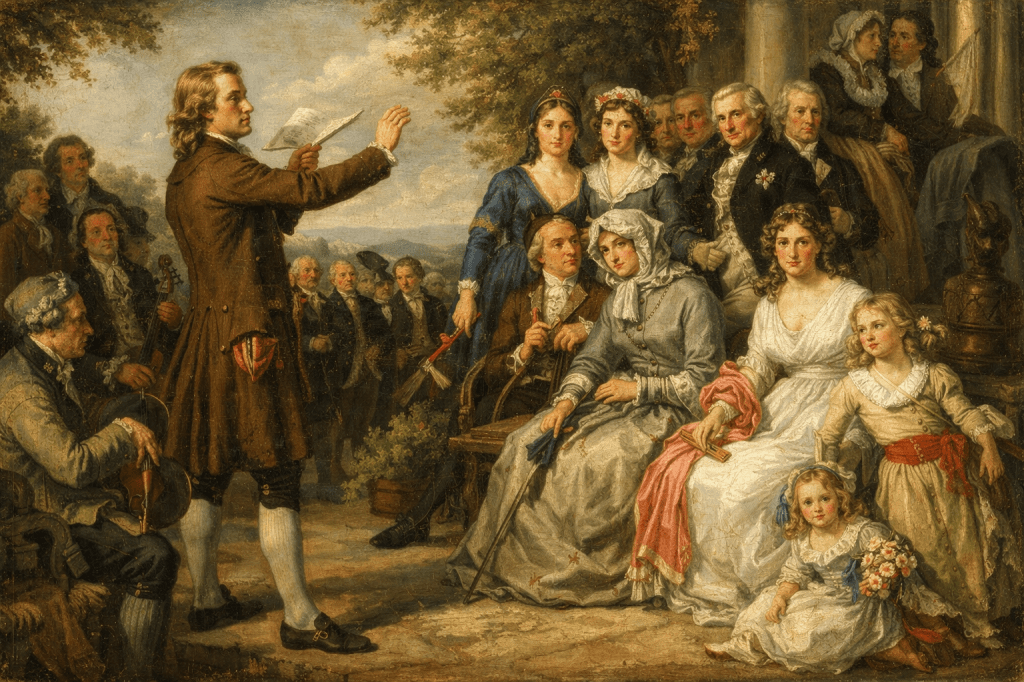
THE ENLIGHTENMENT
The Enlightenment, also known as “the Age of Reason”, was an intellectual movement in the eighteenth century that emphasized reason over superstition and science over blind faith.
Enlightenment thinkers like Thomas Paine , Spinoza , Thomas Jefferson , John Locke, Immanuel Kant , David Hume , Isaac Newton, Voltaire etc questioned accepted and popularly held beliefs and spread new ideas about openness and investigation. There were several ideas that dominated enlightenment thoughts .. Including empiricism , skepticism, rationalism ,naturalism ,
progressivism and cosmopolitanism.
Rationalism is the idea that humans are capable of using their faculty of reason and brain to gain knowledge . This was very different and a sharp turn away from the prevailing idea that people needed to rely on religious scripture, church authorities or passed down superstitious beliefs for knowledge.
Skepticism is the attitude of doubting knowledge claims set forth in various areas. Skeptics challenged the adequacy or reliability of these claims by asking what principles they are based upon or what they actually establish, especially of religious and superstitious claims.
Empiricism promotes the idea that knowledge comes from experience and observation of the world…as well as experiment.
Naturalism is the idea that only natural laws and forces (as opposed to supernatural ones) operate in the universe. Instead of using supernatural or spiritual explanations, naturalism focuses on explanations that come from the laws of nature. … Naturalism refers to a realistic approach to art that rejects idealized experiences.
Progressivism is the idea that through their powers of reason and observation, humans can make unlimited, linear progress over time.
Finally, cosmopolitanism reflected Enlightenment thinkers’ view of themselves as actively engaged citizens of the world as opposed to provincial and close-minded individuals. In all, Enlightenment thinkers endeavored to be ruled by reason, not prejudice.
So What did the enlightenment achieve?
The Enlightenment produced numerous intellectual books, essays, revolutionary political laws, ideas , political modernization in terms of focusing on democratic values and institutions and the creation of modern, liberal democracies.
Enlightenment thinkers sought to curtail the political power of organized religion, and thereby prevent another age of intolerant religious war, not to mention the multiple inventions, and numerous scientific discoveries.
The enlightenment gave us the mordern world we have today.
So like I said in the beginning, when I look at Africa today and my country Nigeria, all I see is the western world in the dark ages 400 years ago . A continent crippled by superstitious beliefs ,over religiousness and dogmatism.
Just like the burning of witches on the stake by medieval western world , the continuously and community reinforced superstitious beliefs that human body parts can give you money has lead to the death of innocent victims here in Africa today.
Superstitious beliefs and over religiousness have crippled societal development here in Africa.
Africa today is just like the western world centuries ago, we are still living in the dark ages and in ignorance and only an enlightenment type revolution like the one overly outnumbered mordern day scientific and philosophically minded African skeptics , rationalists , humanist ,progressivist , irreligious , naturalists and empiricist advocate.
A movement i am proudly a member of and you should be too. We need to wake our brothers and sisters up .. this is the only way Africa can really compete in the mordern world and with the rest of the world.


 Culture Beyond the Mainstream