
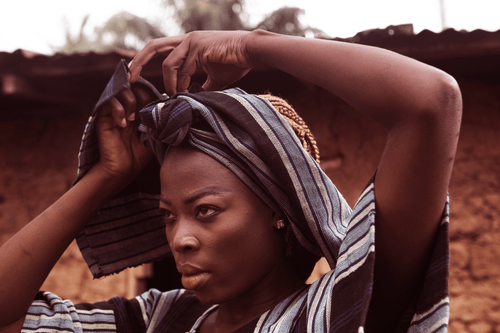
Traditional African textiles are far more than decorative fabrics; they are carriers of meaning, memory, and identity. Across the continent, cloth functions as a visual language through which communities express social status, spiritual beliefs, history, and collective values. Textiles such as Aso Oke, Kente, Adire, and Seghosen reveal how African societies have long used fabric as a medium for storytelling and cultural preservation.
Aso Oke, meaning “top cloth” among the Yoruba, is a handwoven textile traditionally worn during important ceremonies such as weddings, chieftaincy installations, and festivals. Its symbolism is embedded in its weight, texture, and colors. The thickness of Aso Oke signifies prestige and dignity, often associated with elders, leaders, and individuals of high social standing. Different types of Aso Oke communicate specific meanings; Sanyan, woven with silk, reflects wealth and nobility, while Alaari, characterized by deep red tones, symbolizes strength, vitality, and authority. Wearing Aso Oke is both a personal and communal statement, linking the individual to ancestry and cultural continuity.
Kente, originating from the Akan people of Ghana, is one of the most symbolically dense African textiles. Traditionally reserved for royalty and special occasions, Kente operates as a philosophical and moral language woven into cloth. Each color carries significance, with gold representing wealth and kingship, green symbolizing growth and renewal, black denoting spiritual strength and maturity, and blue expressing peace and harmony. The intricate patterns often reference proverbs, historical moments, or ethical principles. Kente is not merely ornamental; it communicates values such as leadership, unity, and responsibility, turning the wearer into a bearer of cultural wisdom.
Adire, a resist-dyed indigo textile from Yoruba communities, reflects deep connections to spirituality, environment, and social experience. Traditionally produced by women, Adire patterns draw inspiration from nature, everyday life, and metaphysical beliefs. Motifs such as the snake represent transformation and spiritual power, while drum-inspired designs signify communication and celebration. Historically, Adire also functioned as a subtle form of cultural resistance, preserving indigenous knowledge and identity during periods of colonial influence. Each Adire cloth tells a story, transforming fabric into a narrative surface shaped by memory and belief.
Seghosen, associated with the owo people of the owo Kingdom, is a textile strongly tied to royalty, ritual, and authority. Often richly woven and adorned with symbolic motifs, Seghosen signifies divine kingship and ancestral continuity. Its patterns reference the Oba, spiritual forces, and the sacred order of society, reinforcing hierarchy and respect. Wearing Seghosen is not simply an act of adornment but a ritual expression of power, tradition, and spiritual connection. The textile embodies the belief that leadership is sanctioned both culturally and spiritually.
Together, these textiles demonstrate that in African societies, cloth is a form of cultural memory. Aso Oke, Kente, Adire, and Seghosen are not static traditions but living expressions that continue to evolve while retaining their symbolic essence. In a world increasingly shaped by mass production and fleeting trends, these fabrics affirm the enduring power of meaning, identity, and history woven into every thread.




 Culture Beyond the Mainstream