
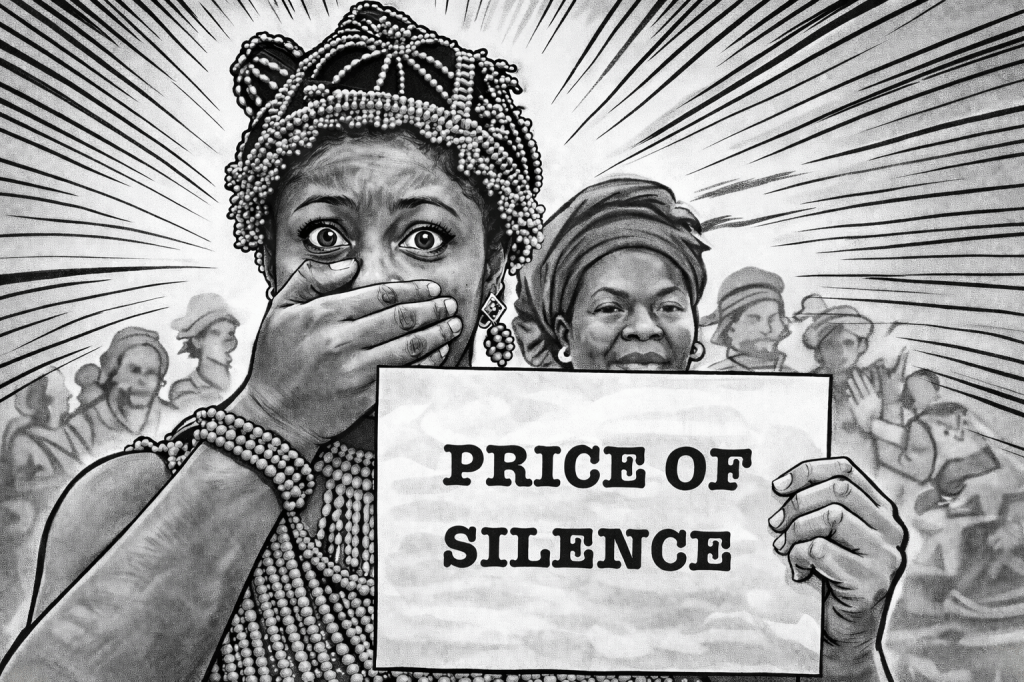
Silence has become a survival strategy inside many African institutions. Across education, government, and workplaces, conformity is often rewarded while individuality is treated as a threat. Rules are created not to manage behavior but to flatten identity, discouraging personal, cultural, and ethnic expression. In these environments, speaking out comes with consequences, so silence becomes the safest option. It is not agreement, but endurance.
A clear example can be seen in Nigerian universities, where strict codes of appearance enforce a single acceptable look. Policies banning long hair, dreadlocks, piercings, or even jeans in some private institutions force students to suppress their identities in exchange for academic survival. Admission becomes conditional not just on academic performance but on visual obedience. Students learn early that self expression can cost them their future, so they comply quietly. Over time, this normalizes the idea that success requires erasing visible differences.
This pattern extends beyond education into government and political spaces, particularly in Nigeria where ethnic power dynamics are deeply entrenched. Smaller ethnic groups are often pressured to assimilate into larger dominant identities to gain access to political inclusion, resources, or protection. Tribal identity becomes transactional. A striking example is a public comment by Ebe Orukpe on Facebook, where he stated that tribes within his state who do not speak the language of the dominant ethnic group would be denied inclusion. Statements like this reveal how cultural bullying is used as a political tool. Faced with exclusion, many communities choose silence and forced conformity, abandoning their languages, histories, and identities to survive within the system.

Workplaces mirror this same culture. In many African institutions, conformity is often rewarded over competence. Employees who align themselves closely with leadership, avoid challenging ideas, and blend into the dominant organizational culture are more likely to receive promotions and benefits. Those who question inefficient systems or bring alternative perspectives are often labeled as difficult or disloyal. Over time, this creates environments where innovation dies quietly. Talented individuals learn that staying silent and agreeable is safer than being honest and capable.
This culture of conformity creates the illusion of unity while masking deep dissatisfaction. Silence in these institutions does not equal loyalty or belief in shared goals. It often signals fear, exhaustion, or strategic patience. People may follow rules outwardly while disengaging internally. When institutions rely on silence to maintain order, they lose access to genuine feedback, creativity, and commitment. Decisions become disconnected from reality because no one feels safe enough to speak the truth.
There is also a psychological cost to enforced conformity. Constant suppression of identity leads to resentment, low morale, and a sense of invisibility. Individuals who are forced to hide who they are rarely develop a strong emotional connection to the institution. Instead of pride, they feel obligation. Instead of ownership, they feel temporary survival. This weakens institutional culture over time, even if outward discipline appears intact.
Diversity is not a weakness in institutions, it is a strength. Allowing people to express who they are creates a sense of belonging, and belonging fuels responsibility. When individuals feel seen and respected, they are more likely to contribute meaningfully, challenge harmful norms, and invest emotionally in shared goals. Institutions that encourage expression tend to be more adaptable, resilient, and innovative because they benefit from a wider range of perspectives and lived experiences.
Silence born from conformity may keep the peace, but it quietly erodes trust and authenticity. Institutions built on fear of difference are stable only on the surface. Real strength comes from creating spaces where people do not have to choose between survival and selfhood. Allowing individuals to be themselves is not just an ethical choice, it is a strategic one. Commitment grows where identity is respected, and progress happens where people are free to speak without fear.




 Culture Beyond the Mainstream