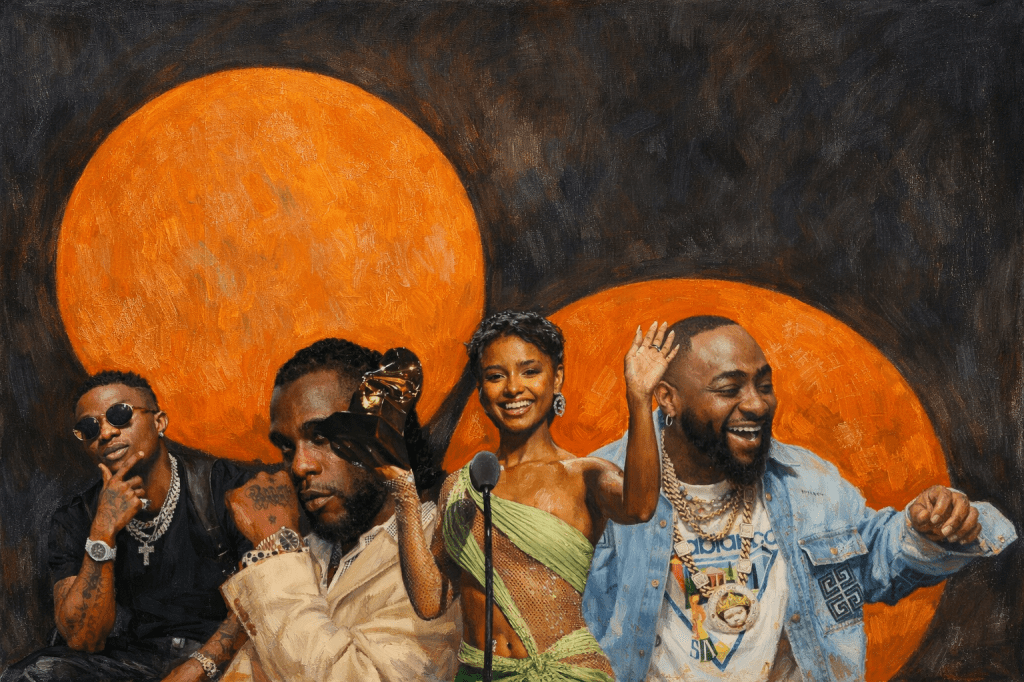
The 2026 Grammy Awards once again placed African music at the center of global attention, but the outcome left many fans across the continent, especially in Nigeria, with a sense of frustration and unfinished celebration. This year saw strong nominations for Burna Boy, Ayra Starr, Omah Lay, Davido, and Wizkid, reinforcing Nigeria’s position as a driving force in contemporary global music. Yet, despite the visibility and recognition, none of the Nigerian nominees won a Grammy in any of the categories they were nominated for.
The most controversial moment of the night came in the category where Davido was nominated but ultimately lost to Tyla. Almost immediately, the result sparked intense debate and outrage online, largely from Nigerian fans who believed Davido was more deserving of the award. Many pointed to the strength of his 2025 album, describing it as one of the most complete and impactful African projects of the year, both commercially and culturally. For these fans, the loss was not viewed in isolation but as part of a longer pattern in which Davido has received multiple Grammy nominations over the years without ever taking home the award.
The reaction went beyond disappointment. Some fans openly called for Davido to boycott the Grammys altogether, arguing that the institution repeatedly overlooks his contributions while benefiting from the global popularity of Afrobeats. To them, continued participation feels like accepting a system that acknowledges African excellence in theory but withholds full recognition in practice.
However, the Grammy Awards do not operate on popularity, streaming numbers, or fan votes. Winners are selected by members of the Recording Academy, a body made up of music professionals such as artists, producers, songwriters, and engineers. These members vote within their areas of expertise, basing decisions on artistic merit as they personally define it. This peer-driven system means that an album’s commercial success or cultural dominance does not automatically translate into a win, and this is often where the disconnect between fans and the institution becomes most visible.
African music, particularly Afrobeats, has grown at a speed that traditional award systems are still struggling to fully understand. Nigerian artists sell out arenas, dominate charts, and shape global pop culture, yet Grammy recognition often feels cautious and selective. What many African fans see as cultural impact and excellence may not always align with how Grammy voters interpret innovation, genre boundaries, or artistic distinction.
Beyond the trophies, the 2026 Grammys revealed a deeper shift in mindset. African audiences are no longer satisfied with nominations alone. There is a growing expectation of fairness, deeper cultural understanding, and equal valuation of African artistry. The conversations sparked this year reflect a community that knows its worth and is increasingly vocal about how it wants to be represented on global platforms.
In the end, a Grammy win, while prestigious, is not the ultimate validation of an artist’s legacy. Nigerian artists continue to shape global sound, influence fashion and culture, and command massive audiences worldwide. The 2026 Grammys may have ended without a Nigerian win, but the influence of African music remains undeniable, raising an even bigger question about whether global institutions are evolving fast enough to truly reflect the culture they celebrate.