Art has a way of bringing attention to things we often take for granted. The relationship between generations, the quiet sacrifices of parenthood, the responsibility of raising another human being, and the question of what we leave behind are familiar parts of life. Yet, in Seed to Seed, Victor Otokpa finds a thoughtful and rather moving way to bring these subjects together, inviting viewers to look at legacy not simply as something we inherit, but as something we must actively nurture and pass on.
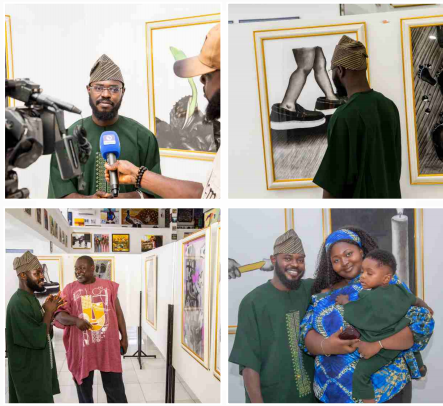
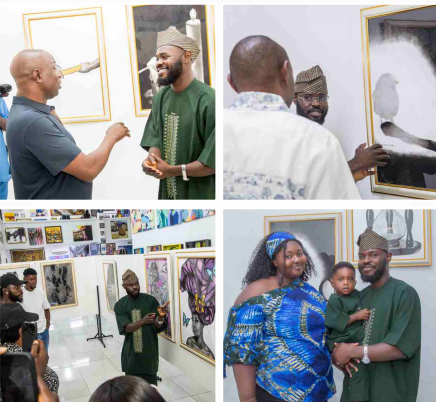
Unveiled at a solo exhibition at the Nike Art Gallery, Abuja, on 24 October 2026, Seed to Seed presented a collection of artworks built around the journey of life, from the promise of a new beginning to the responsibility of preparing the next generation for its own journey. Through a combination of symbolism, figurative imagery and carefully considered titles, Otokpa offers an artistic reflection on family, identity, motherhood, mentorship and the passage of time.
What makes the collection particularly interesting is the way its individual works speak to one another. Rather than appearing as isolated artistic statements, the pieces form a continuous narrative, each one adding another layer to the larger conversation about human existence and generational responsibility.
The journey begins with In My Prime, a striking portrait of a woman whose elaborate purple headwrap immediately commands attention. The butterflies surrounding her introduce an element of movement and transformation, while the flower placed within the headwrap adds a sense of beauty and renewal. There is something deeply symbolic about this image. The woman represents more than physical beauty; she embodies identity, heritage, maturity and the possibilities that come with being at one’s prime. The work also suggests that every generation carries something of the generations before it, even as it prepares to become the foundation for those yet to come.
From this celebration of womanhood, the collection moves into Conception, where the image of an unfinished human silhouette constructed from interlocking puzzle pieces introduces the idea of becoming. The work captures the uncertainty and gradual formation that accompany new life. Not every piece is in place, and not every question has an answer. Yet, there is a sense of possibility in the unfinished figure. It is a reminder that human development is a process shaped by experience, environment, upbringing and the values passed down to us. The transition from In My Prime to Conception is particularly meaningful, as it moves the viewer from the richness of an established identity to the beginnings of another.
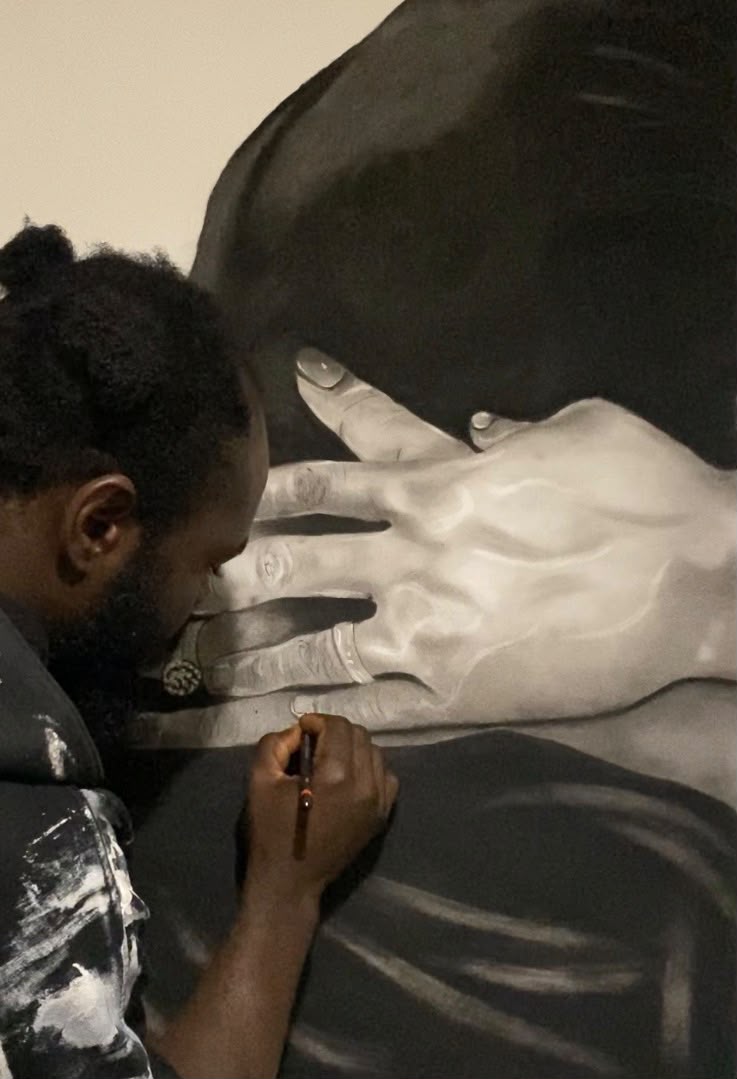
Bonded takes this conversation further through a touching image of two hands resting together over what appears to be a pregnant belly. The simplicity of the composition gives it much of its emotional strength. It speaks of partnership, protection and the shared responsibility that comes with bringing a child into the world. Beyond the physical connection between the figures, the work reflects the importance of providing a stable foundation for the next generation. It is a quiet reminder that raising a child should never be the burden of one person alone. Love, care, patience and commitment are responsibilities that must be shared.
In Footprints, Otokpa shifts attention towards the influence of guidance and mentorship. Overlapping footprints create a visual representation of one generation walking alongside another, leaving marks that may eventually become directions for those who follow. It is an especially thoughtful piece because it challenges the conventional understanding of leadership as simply being ahead of others. Sometimes, the greatest contribution we can make is not in how far we have travelled, but in how well we help someone else find their way. The work recognises the importance of those who guide, encourage and create room for others to grow without expecting them to follow exactly the same path.
This idea finds another expression in In My Father’s Shoes, perhaps one of the more immediately relatable works in the collection. The image of a child’s legs standing inside oversized shoes captures a familiar experience of childhood: the desire to become like the people we admire. There is innocence in the image, but also a deeper reflection on the expectations that come with inheritance. Children often look towards their parents and elders as examples of what they hope to become. However, the work reminds us that growing into those shoes takes time. The next generation must be allowed to learn, make mistakes and discover its own identity before it can fully carry the responsibilities that came before it.
The collection closes its visual argument with Paradox of Time, an image of an hourglass that brings the entire exhibition into perspective. Time is perhaps the one resource that no generation can preserve indefinitely. We often assume there will always be another opportunity to teach, to love, to guide or to make a difference. Yet, the hourglass reminds us that time continues to move, whether or not we are prepared for it. The work gives the exhibition a sense of urgency without becoming overly dramatic. It asks a simple but important question: what are we doing with the time and opportunities we have been given?
One of the strengths of Seed to Seed is its accessible visual language. Otokpa draws from recognisable objects and experiences, allowing viewers to connect with the works without needing an extensive understanding of art theory. A pair of shoes, an hourglass, a set of footprints or a mother’s hands become meaningful starting points for conversations about much bigger subjects. There is an intentional simplicity to these symbols, but their meanings extend beyond what is immediately visible.
The collection also benefits from its sequence. The movement from identity and conception to bonding, mentorship, inheritance and the passing of time gives the exhibition a sense of direction. It feels like a story being told in chapters, with each artwork contributing to a central message. This relationship between the works is important because the subject of legacy cannot be understood from a single moment. It is formed over time, through relationships, decisions, sacrifices and the everyday actions that shape another person’s life.
There is also something worth appreciating about the exhibition’s emphasis on responsibility. Seed to Seed does not present legacy as a matter of wealth, status or material possessions. Instead, it looks towards the less tangible things that often outlive us: values, knowledge, culture, character and the lessons we leave with others. It recognises that what we pass on is not always what we intend to pass on. Our actions, attitudes and choices also become part of the inheritance received by those who come after us.
Victor Otokpa’s Seed to Seed is ultimately a reflection on the interconnectedness of human lives. It reminds us that we are all products of someone’s care, guidance and sacrifice, and that we will, in one way or another, become part of someone else’s story. The exhibition’s message is particularly relevant in a time when conversations about identity, family values and the responsibilities of younger generations continue to evolve.
The successful unveiling at Nike Art Gallery, Abuja, provided a fitting setting for a collection that invites both personal reflection and wider conversation. More than simply presenting a series of artworks, Otokpa brought together a visual narrative about where we come from, the people who shape us and the responsibility we have towards those who will follow.
Perhaps the most enduring thought from Seed to Seed is that legacy is not something we begin thinking about at the end of our lives. It begins much earlier, in the way we live, the people we nurture, the knowledge we share and the paths we make easier for others to follow.
We are all seeds of something that came before us, and in the lives we touch, we are constantly planting what comes next.